Your personal information has almost certainly appeared in at least one data breach. That is not alarmism. It reflects how many large leaks have happened over the past decade and how many people were caught in them. The useful question is not whether it happened, but how to check, and what to do about it.
What a Data Breach Actually Means for You
A data breach happens when someone gets access to stored personal information without permission. A data leak is closely related: the data is exposed by mistake, for example a database left open to the internet, rather than stolen in an attack. For you, the result is the same.
What gets exposed varies widely. Sometimes it is only email addresses. Sometimes it includes passwords, phone numbers, home addresses, dates of birth, ID numbers or financial records.
Exposure does not automatically mean harm. Your email appearing in a leaked database does not mean someone has emptied your bank account. It means your information is now outside your control, and you no longer decide what happens to it.
Most people find out long after the fact. Companies can take months to discover a breach, and notifying regulators and customers adds more time. By the time a letter arrives or a story breaks, the data may have been circulating for a year or more.
How to Check Whether You Were Caught in a Data Breach
The most widely used free tool is Have I Been Pwned (haveibeenpwned.com). Enter an email address and it checks it against hundreds of known leaked datasets, covering billions of accounts. It was built by a respected security researcher and is used by governments and companies as well as individuals.
A positive result means your email appeared in a specific leaked dataset, and it tells you which breach and what kind of data was in it. It does not mean anyone has used your account. A negative result means nothing matching your address has turned up in the datasets the tool knows about, not that your data is definitely safe.
Other places to check:
- Your password manager or browser. Most password managers, and Google Chrome and Apple’s Passwords app, warn you about saved passwords that appear in known breaches.
- Your credit report. Accounts or credit searches you do not recognise can be the first sign that stolen details are being used. In the US, you can get free reports at AnnualCreditReport.com. In the UK, you can check your credit file free through the main credit reference agencies.
- Every email address you have used. Old addresses you rarely open often appear in older leaks, and attackers do not care whether you still check that inbox.
What the Tools Do Not Tell You
Breach lookup tools only reflect incidents that have been discovered and shared. If a company never disclosed a breach, or stolen data has not surfaced in any dataset the tool can see, it will not appear.
A clean result is not a guarantee. It means no known breach has been linked to your address yet.
The structural gap is worth understanding. In many places, the penalty for disclosing late is low, while the damage to a company’s reputation from disclosing is high. That does not encourage speed. A lookup tool is only as good as the disclosure rules that feed it, and those rules have real weaknesses.
What to Do If Your Data Was in a Breach
If a lookup or a company notice shows your data was exposed, work through these steps in order:
- Change the password for the affected account to one you use nowhere else. A password manager makes this easy.
- Change it everywhere you reused it. Criminals test leaked passwords on other sites. Password reuse is how one breach becomes several.
- Turn on two-factor authentication, so a stolen password alone is not enough to get in. An authenticator app is safer than text-message codes.
- Protect your money if financial data was taken. Contact your bank or card provider and ask them to watch the account. In the US, place a free credit freeze with Equifax, Experian and TransUnion, which stops anyone opening new credit in your name. In the UK, you can apply for Cifas Protective Registration, which adds extra checks when someone applies for credit using your details.
- Watch for follow-up scams. Criminals often contact breach victims pretending to be the company, the bank or the police, using the leaked details to sound convincing. Do not click links or give information to anyone who contacts you about the breach. Contact the company yourself using details from its official website.
- Keep a record of when you found out, which company was involved, what data was exposed and what you did. You will need this for a complaint or a compensation claim.
If someone has already used your details to open accounts or commit fraud, report it: at IdentityTheft.gov in the US, or to Action Fraud (or Police Scotland on 101) in the UK.
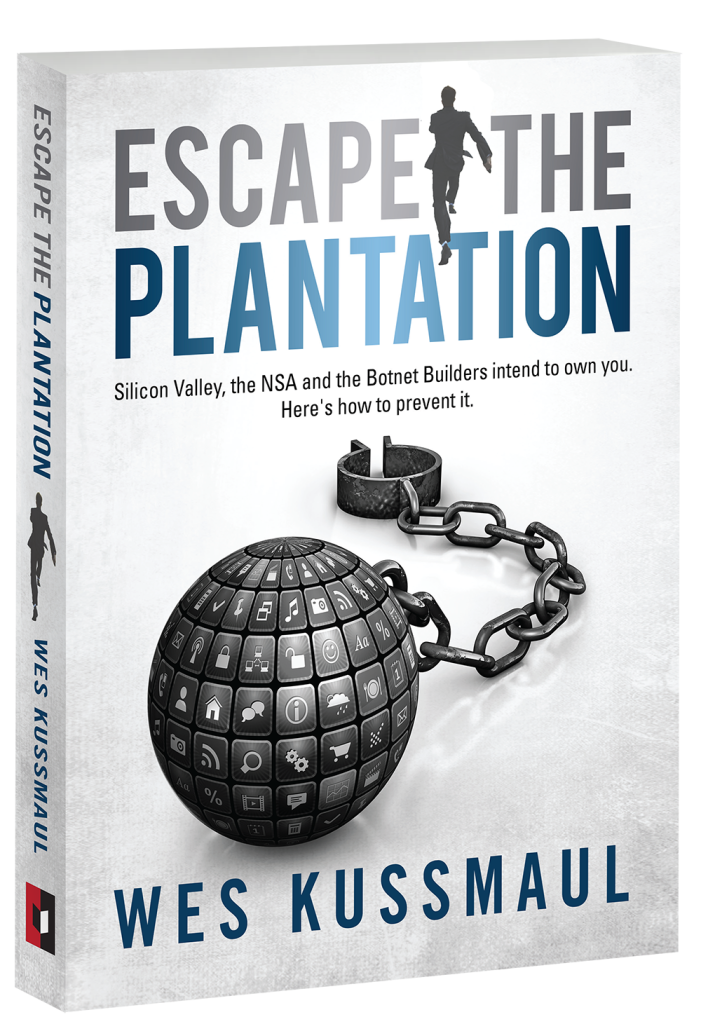
Breaches keep happening because companies hold copies of your identity and face few consequences when they lose them. That imbalance is at the heart of Wes Kussmaul’s Escape the Plantation, and you can get a free copy at the end of this article.
What Companies Are Required to Do, and What They Actually Do
Under UK and EU data protection law, a company that suffers a breach of personal data must usually report it to the regulator within 72 hours of becoming aware of it. If the breach poses a high risk to the people affected, it must also tell them without undue delay.
In the US, there is no single federal rule. Every state has its own breach notification law, with different deadlines and definitions, and some industries, such as healthcare and finance, have extra requirements.
In practice, notifications often arrive late. When they do arrive, they are often vague, describing a “security incident” without saying what data was taken or how many people were affected.
Penalties exist, and regulators have issued large fines. But enforcement is inconsistent, and many breaches end with no meaningful sanction at all. The obligations exist on paper, enforcement is slow, and affected people are largely left to manage the risk themselves. We look at why in Platform Accountability: Why the Gap Never Closes.
How to Complain, and Whether You Can Claim Compensation
In the UK, first complain to the company itself. If you are not satisfied with its response, complain to the Information Commissioner’s Office (ico.org.uk). In the EU, complain to your national data protection authority. In the US, report unfair or deceptive data practices to the FTC at reportfraud.ftc.gov or to your state attorney general.
A useful complaint includes the company’s name, the approximate date of the breach, the type of data involved, and any response you received. Our guide on how to complain so companies have to respond covers the wording.
Be realistic about outcomes. Regulators rarely act on a single complaint, but complaints build a record, and many complaints about the same company can trigger an investigation.
Compensation is possible but uncommon. UK and EU law give you the right to claim for damage, including distress, caused by a breach, but individual claims are hard to win without evidence of specific harm. In the US, large breaches often lead to class action settlements, and you may be able to file a claim if you were affected.
The Structural Problem Behind Every Breach
Lookup tools and notification letters are responses to a system that does not reliably prevent breaches or consistently punish negligence. They are useful, but they come after the real problem.
Companies collect more data than they need, keep it longer than necessary, and often face limited consequences when it is exposed. Data is treated as an asset, securing it costs money, and the cost of a breach is often manageable for the company. It is much less manageable for you.
There is also a deeper accountability problem. Online systems have no reliable way to tie actions to identifiable, responsible parties. When data is stolen, tracing who accessed what, and from where, is genuinely difficult, and that makes enforcement harder even when regulators are trying.
Individual action is necessary, but it is not enough. The burden falls on the people least responsible for the problem, the same pattern seen across platform and institutional failures.
Frequently asked questions
What should I do if my data was in a data breach?
Change the password for the affected account and anywhere you reused it, turn on two-factor authentication, and contact your bank if financial details were exposed. In the US, consider a free credit freeze. Be suspicious of anyone who contacts you about the breach.
What is the difference between a data breach and a data leak?
A data breach usually means someone broke in and took data. A data leak means data was exposed by accident, for example through a database left unprotected. Both put your information outside your control, and the steps to protect yourself are the same.
Is Have I Been Pwned safe to use with my real email address?
Yes. It is run by a well-known security researcher, is widely used by individuals, companies and governments, and does not keep the email addresses people search for. Using it does not create a new risk.
If a company told me about a data breach, do I have to do anything?
You are not legally required to, but you should. At minimum, change that password and any reused ones. If the notice mentions financial or ID data, contact your bank and consider a credit freeze or protective registration.
Can I get compensation if my data was exposed in a breach?
Sometimes. UK and EU law give you the right to claim for damage caused by a breach, but individual claims rarely succeed without evidence of specific harm. In the US, check whether a class action settlement has been announced for the breach that affected you.
Related reading
- Platform Accountability: Why the Gap Never Closes
- Who Is Accountable When a Platform Fails? A Field Guide
- How to Complain So Companies Actually Have to Respond
- Berlin’s Repeat Data Leaks: A Governance Failure
Companies hold copies of your identity and face few consequences when they lose them. Wes Kussmaul’s Escape the Plantation explains why the internet works this way and how identity you own, rather than identity scattered across company databases, would make that harder. Enter your email below to get your free copy and follow The Untouchables’ work on accountability online.