If you have ever made something — written an article, composed a piece of music, built a piece of software — you may have wondered how to copyright something in the UK and whether you need to do anything official to protect it. The short answer is no. But the longer answer is more complicated, and the gap between those two answers is where most problems begin.
The Starting Point Most People Miss
UK copyright protection is automatic. The moment you create an original work and fix it in some tangible form — write it down, record it, save it as a file — it is protected under the Copyright, Designs and Patents Act 1988. There is no register to sign up to, no fee to pay, and no certificate to receive.
“Original” here does not mean groundbreaking or novel. It simply means the work came from you — you created it rather than copied it from someone else. A perfectly ordinary email qualifies. So does a functional database.
The structural problem is this: automatic rights exist, but proving those rights when someone challenges them still falls entirely on you. The law gives you protection; it does not give you the means to exercise it.
What Categories of Work Are Actually Covered
UK copyright law recognises several distinct categories:
- Literary works — this includes written text, but also software code and databases, which surprises many people
- Dramatic works — scripts, choreography
- Musical works — the composition itself, separate from any recording of it
- Artistic works — photographs, paintings, architecture, technical drawings
- Sound recordings
- Films
- Broadcasts
- Typographical arrangements — the layout of a published edition
What is not covered is equally important. Ideas, facts, styles, and methods cannot be protected — only the specific way you have expressed them. You cannot copyright the concept of a detective who solves crimes through logic. You can copyright the particular story you wrote about one.
This idea-versus-expression line is where most real disputes actually begin. Someone takes your concept, rewrites it in their own words, and argues they have not copied anything protected. Technically, they may be right.
Duration: How Long the Protection Lasts
Protection does not last forever. The standard durations under UK law are:
- Literary, dramatic, musical, and artistic works: 70 years from the end of the year in which the author died
- Sound recordings: 50 years from the end of the year they were made, or 70 years from first publication if they were published in that window
- Films: 70 years after the death of the last surviving principal director, screenplay author, dialogue author, or composer of music created for the film
- Broadcasts: 50 years from the end of the year of first broadcast
When copyright expires, the work enters the public domain. Anyone can reproduce, adapt, or build on it without permission or payment. Shakespeare’s plays, for example, are long in the public domain — though a specific modern edition of one may not be.
Post-Brexit, the UK has diverged in some areas from EU copyright terms. Anyone selling or licensing work across both markets should take specific advice, because the rules no longer automatically align.
The Accountability Gap: Rights Without Enforcement
Owning copyright and being able to defend it are two different things. Copyright in the UK is enforced through civil law, which means if someone infringes your work, you are responsible for taking action against them. The burden of proof sits with you, not the infringer.
Litigation is expensive — but it is not uniformly out of reach, and this is the part most creators get wrong. The Intellectual Property Enterprise Court (IPEC) exists specifically to handle lower-value intellectual property claims, and it has two tracks.
The small claims track handles claims up to £10,000. It is designed to be used without a lawyer, hearings are short and informal, and the costs one side can recover from the other are very limited. For a freelancer whose illustration was used without a licence, or a writer whose article was republished wholesale, this is a realistic route — and it is the part of the system most individual creators do not know exists.
The multi-track handles larger claims, with damages capped at £500,000 and recoverable costs capped at £50,000. That £50,000 figure is widely misread. It is a ceiling on what you might be ordered to pay the other side if you lose — not the price of bringing a claim.
The harder problems come before any court. Platforms hosting infringing content operate under notice-and-takedown frameworks, which means that when someone uploads your work without permission, you are expected to find it, report it, and follow up if the platform is slow to respond. The work of policing infringement is transferred to the person who was harmed by it.
That is the real structural imbalance. Large organisations run automated monitoring at scale and send takedowns by the thousand. A freelance illustrator whose work is being reposted without credit has to notice it happening at all — and that is where most infringement quietly succeeds.
Practical Steps to Strengthen Your Position
Since registration is not an option in the UK, the alternative is building a paper trail that demonstrates you created the work and when.
- Keep dated drafts. Version histories in Google Docs or Word, saved files with timestamps, email threads where you shared early drafts — all of these serve as evidence.
- Mark your work. The copyright symbol ©, your name, and the year are not legally required, but they signal ownership clearly and can deter casual infringement. They also make it harder for an infringer to claim they did not know the work was protected.
- Use a timestamping service. Several services will create a verifiable, dated record of a file. This is particularly useful for digital works where file metadata can be altered.
- Write down any licensing agreements. Verbal agreements are legally valid in the UK, but proving what was agreed is nearly impossible without a written record. Even a short email confirming terms is better than nothing.
- Check your employment contract. If you create work as part of your job, the default rule under UK law assigns copyright to your employer, not to you. Many people do not realise this until a dispute arises.
Where Moral Rights Fit In
UK law grants moral rights separately from economic rights. The two main ones are the right to be identified as the author of your work, and the right to object to treatment of your work that damages your reputation — called the right against derogatory treatment.
Here is the catch: moral rights are not fully automatic. The right to be identified as the author must be asserted in writing. You often see this on the copyright page of a book: “The author asserts their moral right to be identified as the author of this work.”
Moral rights cannot be transferred to someone else, but they can be waived. Commercial contracts frequently include a clause waiving moral rights, and many creators sign them without noticing. Once waived, the right is gone for that work.
Employees creating work in the course of their employment have no right to be identified as the author of that work — another reason to read your contract carefully.
What Reform Would Actually Look Like
The current system reflects a structural bias toward well-resourced rights holders. Large companies can register trademarks, run monitoring programmes, and pursue infringers at scale. Individual creators generally cannot do any of those things.
AI-generated content is adding new pressure. The UK has an unusual provision that treats computer-generated works — those with no human author — as potentially copyrightable, with the person who made the arrangements for the work to be created treated as the author. Most other countries do not take this approach, and the UK’s own position is under active review.
Meaningful reform would need to address enforcement access, not just the rules. A right you cannot practically exercise is not functioning as a right. That means either reducing the cost and complexity of enforcement further, or creating collective mechanisms that allow individual creators to pool resources — neither of which is straightforward to design or fund.
Frequently asked questions
Do I need to register copyright in the UK?
No. Copyright protection in the UK is automatic from the moment you create an original work and fix it in some form. There is no registration system. What you do need is evidence that you created the work, which is why keeping dated drafts and version histories matters.
Can I copyright an idea or a concept?
No. Copyright protects the specific expression of an idea, not the idea itself. If you write a novel about a time-travelling historian, the novel is protected. The concept of a time-travelling historian is not. Anyone else can write their own version of that concept without infringing your copyright.
Who owns the copyright if I create something as part of my job?
Under UK law, if you create a work in the course of your employment, the copyright belongs to your employer by default — not to you. This applies to written work, software, designs, and most other categories. Freelancers and contractors are in a different position, but the terms of any contract should be checked carefully, since agreements can override the default rules.
What can I actually do if someone uses my work without permission?
Start with a written notice to the person or the platform hosting the work, setting out what was used, that you own it, and what you want done. Keep a copy. If that fails and the loss is under £10,000, the IPEC small claims track is designed for exactly this situation and does not require a solicitor. For anything larger or more complex, take legal advice before filing.
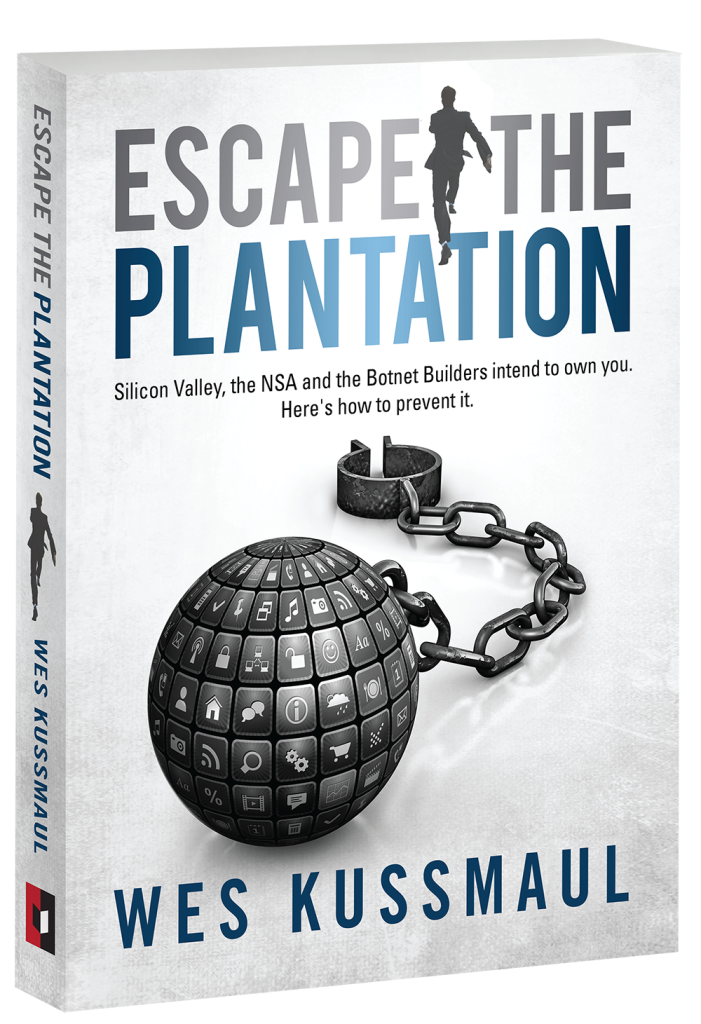
Everyone deserves authenticity and accountability online. That is the mission we are working on. Subscribe to join us, and get a free copy of Wes Kussmaul’s Escape the Plantation.
This article is general information, not legal advice. Laws differ by country — consult a qualified solicitor about your situation.