The US Department of Justice, the UK’s National Crime Agency, and the Crown Prosecution Service have signed a memorandum of understanding committing them to work together on cases connected to scam operations based in Southeast Asia. The announcement has generated coverage, and people who have lost money to these schemes are understandably paying attention. But a signed document between law enforcement bodies is not the same as an enforcement action, and understanding the difference matters if you want to assess what this agreement can actually deliver on cross-border scam center accountability.
What happened
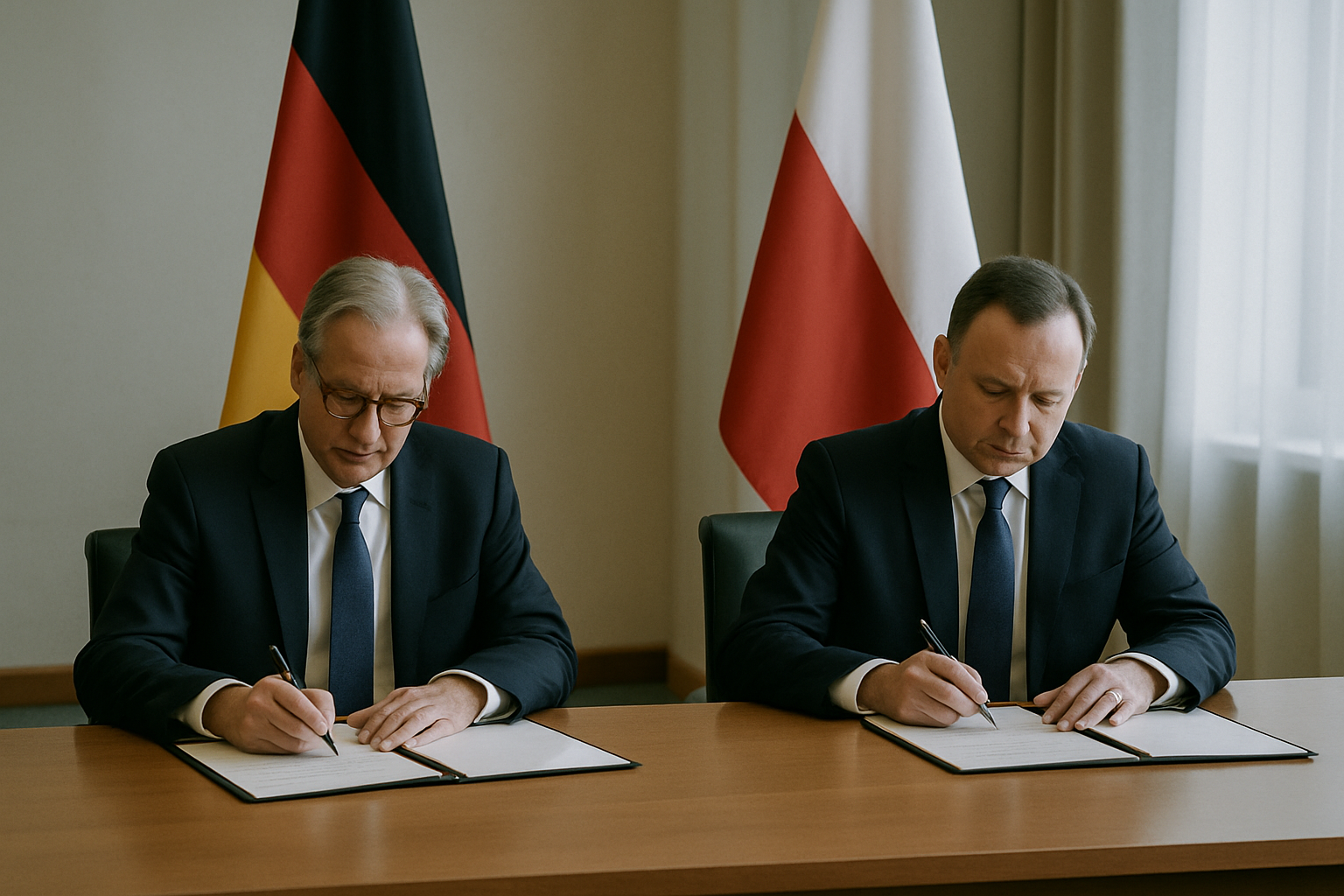
Three institutions — the DOJ, the NCA, and the CPS — put their names to a formal statement of intent. A memorandum of understanding, often called an MOU, is an agreement that cooperation is desirable and sets out a framework for how the parties will share information and coordinate going forward. It is not a treaty. It does not create new law. It does not automatically trigger prosecutions or compel any government outside the US and UK to act.
The specific scope of the agreement — which countries are implicated, which types of operations are covered, whether any Southeast Asian agencies are formally involved — has not been disclosed publicly beyond what the signing parties have stated. That gap in detail is worth noting.
Who is affected
The people most directly affected are those who have been targeted by, or lost money to, scam operations originating in Southeast Asia. The memo does not promise restitution. It does not create a compensation process. It does not guarantee that any individual case will be reviewed.
Investigators in both the US and the UK now have a formal coordination channel. In principle, that means clearer pathways for sharing case intelligence across the Atlantic. In practice, how much difference that makes depends on how actively both sides use the framework.
The stated target is Southeast Asian scam operations. These have been widely reported to involve large compounds where workers are sometimes held against their will and forced to run fraud schemes against people around the world. But the governments and law enforcement bodies in the countries where those compounds sit are not named as parties to this agreement. That matters enormously, because the operations themselves are outside US and UK legal jurisdiction. Neither country can walk in and make an arrest without the cooperation of the host government.
What the real risk is
The structural problem here is not that the memo is insincere. It is that the memo addresses the layer of the problem that US and UK authorities can reach — prosecutions of people within their jurisdictions, tracing financial flows through regulated systems, extraditions where treaties already allow them — while the operational core of these scam centers sits elsewhere.
Coordination between two wealthy, English-speaking democracies with already-close law enforcement ties is genuinely useful. But it does not automatically dismantle compounds or put organizers in court if those targets are protected by local political arrangements or sit beyond any existing extradition agreement.
There is also a specific risk that the announcement substitutes for action. A signed MOU generates a press release. It signals seriousness. Whether it generates prosecutions or operational takedowns is a separate question, and one that cannot be answered yet.
Victims who read coverage of this agreement may assume that accountability is now more likely. That assumption may not be warranted. Raising expectations without delivering outcomes erodes the institutional trust that makes cooperation meaningful in the first place.
What to do today
These are concrete steps you can take now, regardless of how the agreement unfolds.
- Report your experience. If you or someone you know has been targeted by a scam linked to Southeast Asian operations, file a report with your national fraud reporting body. In the US, that is the FBI’s Internet Crime Complaint Center (IC3) at ic3.gov. In the UK, it is Action Fraud at actionfraud.police.uk. Reports build the case data that investigators rely on, even if you never hear back directly.
- Ask specifically about victim processes. Contact the NCA or DOJ press offices and ask directly whether there is a victim reporting or compensation mechanism connected to this agreement. That information has not been disclosed publicly. Do not assume one exists until you receive a clear answer.
- Track the enforcement record, not the announcement. Bookmark the DOJ press release page (justice.gov/news) and the NCA news page (nationalcrimeagency.gov.uk/news). Check back in six months and again in twelve. Look for prosecutions, extraditions, or operational takedowns that are explicitly attributed to this cooperation framework. That is the only honest measure of whether the MOU produced results.
- Push for benchmarks if you work in policy, journalism, or civil society. Ask both agencies: how many cases are currently being coordinated under this framework, what timeline is expected for outcomes, and what does success look like? None of that has been made public. Specific, measurable commitments are harder to quietly abandon than general statements of intent.
- Do not act on the assumption that your losses will be recovered. Nothing in the announcement suggests a restitution mechanism. If you are in contact with a lawyer or a victim support organization, ask them to monitor this agreement specifically and flag any developments that could affect your situation.
Why this keeps happening
The pattern here is familiar. Institutional responses tend to match the scale of what institutions can control, not the scale of the problem. The US and UK can sign agreements with each other quickly because they already have deep law enforcement relationships built over decades. Reaching the actual source of the harm requires something harder — sustained political pressure on, or genuine cooperation from, governments in the region where the operations physically run.
MOUs are also a low-cost tool for governments facing public pressure. They require no legislative approval, no budget commitment, and no immediate accountability if nothing changes. That makes them attractive as a visible response even when the underlying problem demands more.
There is a deeper structural issue that makes cross-border scam center accountability so difficult: the internet was built without any reliable way to verify who anyone actually is. Scam operations exploit that gap at every stage. Recruiters use fabricated identities to lure workers. Fraudsters use manufactured personas to target victims. Money moves through layered infrastructure that obscures its origin. Each country’s enforcement apparatus is designed to operate within its own jurisdiction. When harm is manufactured in one place, routed through infrastructure in several others, and lands on victims in dozens more, no single national system is built to address it.
Even when cooperation is genuine, it moves far more slowly than the operations it is trying to stop. Until the conditions that allow these compounds to operate — including any local political arrangements, financial flows through regulated systems, and the platform infrastructure that enables recruitment and fraud — are addressed directly, enforcement actions at the prosecution layer will remain partial.
Frequently asked questions
Does this agreement mean scam centers in Southeast Asia will be shut down?
Not directly. The US and UK have no authority to conduct operations inside other countries without those governments’ cooperation. The agreement covers what US and UK agencies can do within their own jurisdictions — prosecutions, financial investigations, extraditions where treaties permit. Shutting down physical compounds requires action by the governments where those compounds are located, and those governments are not parties to this MOU.
What is the difference between a memorandum of understanding and an actual law enforcement treaty?
A treaty is a binding legal agreement between governments, ratified through a formal process, with defined obligations and consequences. A memorandum of understanding is a statement of intent. It signals that the parties want to work together and sets out how they plan to do so. It does not create legal obligations in the same way, does not require parliamentary or congressional approval, and does not automatically trigger any enforcement action.
Can victims of these scams expect their cases to be taken up as a result of this agreement?
There is no public information indicating that individual victim cases will be reviewed or that a compensation process has been established. Victims should report to their national fraud reporting body and ask the relevant agencies directly whether any victim-facing process exists. Do not assume that a government-to-government coordination agreement translates into individual case review without confirmation.
Originally reported by therecord.media. This article summarises that reporting and adds practical guidance.
Scams, fraud, bots and manufactured noise keep spreading because the internet was built with no reliable way to know who anyone actually is. Everyone deserves authenticity and accountability online, and that is the mission we are working on. Subscribe to follow our coverage as this story develops.